
Wavelength Edition 01: Teo Van Barthold on LinkedIn Ads

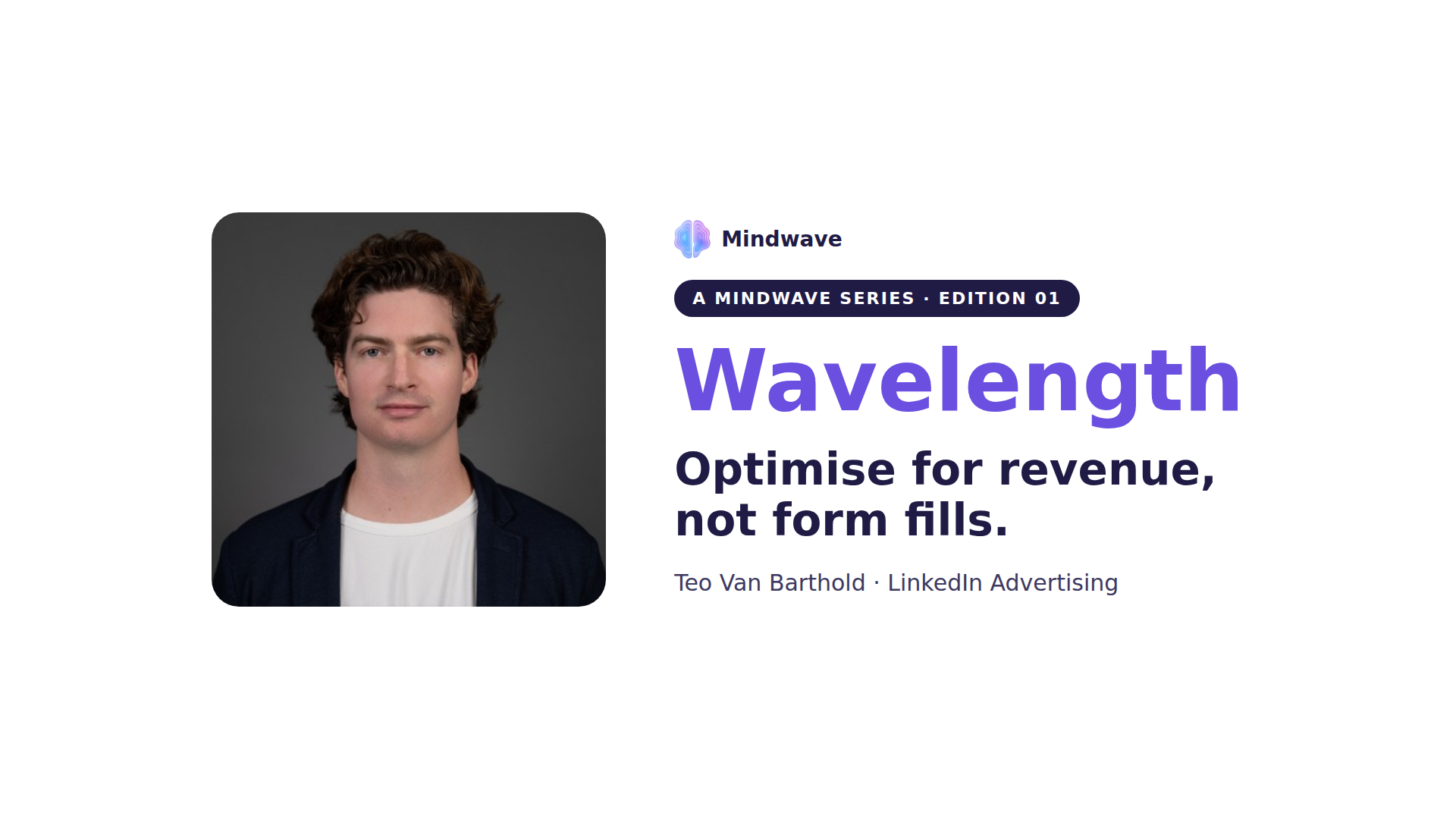
Wavelength is a monthly Q&A with people who work on the ad platforms, and in the agencies around them, about how they actually do the job.
First up is Teo Van Barthold, who has spent seven years at LinkedIn working in advertising. We were delighted he said yes, and his answers have the kind of detail you rarely get from someone inside the platform.
Every guest gets the same first six questions, so across the year we can see how people at LinkedIn, Google, Meta and Klaviyo think about the same problems. The last two are written for each guest.
The six we ask everyone
1. What does a great agency partner do differently when running LinkedIn Ads?
The best agency partners think about the unique capabilities of the platform, mainly our first-party data, and embed this into every element of the campaign process.
That runs from planning the audience by breaking down the buying committee, to tailoring the creative to resonate with each audience's attributes.
2. How can AI be best applied when managing a LinkedIn Ads account today, and where does it still fall short?
Where it works: creative volume and variation, copy iteration, bid and budget pacing, synthetic audience testing pre-launch and so on.
Where it falls short: it doesn't know your business as well as you do. It's only as good as the signals you feed it.
To truly innovate, a human needs to dictate the vision.
3. What's the single most common mistake you see brands make on LinkedIn Ads, and what does it cost them?
Treating LinkedIn as a bottom-funnel lead machine.
All the budget goes into lead gen forms, aimed at the 5% in market today, with nothing building the brand and the value exchange for the 95%.
Established brands might get away with this approach in the short term. For new companies, it's the easiest way to fall at the first hurdle.
4. Why does LinkedIn Ads deserve a guaranteed line item on every modern media plan?
Because it's the only channel where the targeting data is declared by the member and kept current by them. Job title, company, seniority, skills. Nobody else has that.
And B2B is bought by a committee, not a person. LinkedIn is where you can reach the whole committee, including the people who never fill in a form but absolutely have a veto.
It's also where the shortlist gets formed for the buying committee, before anyone raises a hand.
5. What does best-in-class first-party data and CRM integration look like on LinkedIn Ads, and what should brands be setting up?
Best in class is a closed loop: spend goes out, revenue comes back in, and the platform optimises against revenue rather than form fills.
What to set up, in order:
- Insight Tag and the Conversions API. Server-side gives you the signal the tag now misses.
- CRM integration (Salesforce, Dynamics, HubSpot) so closed-won flows back.
- Conversion events mapped to pipeline stages, not form submissions.
- Matched audiences from CRM lists and company lists, refreshed automatically, not a CSV someone uploads once a quarter.
- Suppression lists. Existing customers and closed-lost shouldn't be costing you money.
The caveat: none of it works if the CRM data is poor. Fix that first.
6. What's one thing everyone in the industry believes about LinkedIn Ads that you think is actually wrong?
That it's just for B2B.
We have pockets of success in the luxury B2C space, but there is a huge opportunity to speak to the "consumer" behind the professional.
Two for Teo
7. You've been inside LinkedIn for seven years. What's changed most in how enterprises actually buy, rather than what's changed in the product?
The rise of the influencers.
We've seen just how powerfully the advocacy of a trusted voice with a large following can impact the buying committee.
8. You have extensive B2B experience. What advice would you give to new or existing B2B businesses trying to grow their customer base online?
Keep things simple.
B2B strategies can get very complex quickly, making it harder for your customers to understand you. Keeping it simple is one of the hardest disciplines.
To quote Steve Jobs: "Simple can be harder than complex: you have to work hard to get your thinking clean to make it simple. But it's worth it in the end because once you get there, you can move mountains."
Thanks again to Teo for being our first guest. Edition 02 is out next month.
More news & views





Our 3-step process
for Smarter Growth

Audit & Assess
We dig into your current channels - search, social, email and automation - understand your data, map what's actually driving revenue and find where budget is being lost.
Consultation & Onboarding
We set shared targets, connect your platforms and get every system and data set talking to each other, so nothing falls through the cracks from day one.
We Get to Work
We run your campaigns and automations as one connected system, spotting patterns across channels faster than any single-platform view can.